-
Ethics in Contact Rhetoric: Communication and the Dance of Bodies and Power
Jon P. Radwan Ph.D., Dale Cyphert, Ellen W. Gorsevski, and Omar Swartz
Ethics in Contact Rhetoric offers a novel communication theory centering touch and decentering symbolism. Critical case studies spanning diverse national and cultural contexts demonstrate contact rhetoric’s rich heuristic and applications. Inspired by Gandhi and King’s tradition of nonviolent power, a contact orientation outlines the incarnate and immediate ground of communication ethics. All media and symbolisms grow out of contact, one’s crucial bodily relationships with supporters and oppressors. Here, ethical interactions are defined as bio-relational dances arcing steps of nurture, respect, justice, and too often, violence. As efforts advance through space and time, interpersonal and social gyres form cycles manifesting degrees of relational balance, dynamics which can be described and interpreted with a multidimensional schema drawn from dance. Centering humanity’s physical mutuality is a vital move today. Communication is a thoroughly interactive art, but the West’s ancient “instrumental” (Aristotelian) tradition of rhetorical theory and its accompanying utilitarian ethic have worked across millennia to valorize individual agency over joint action. This book re-balances rhetorical theory by decentering symbolic acts and enabling critique of embodied relational patterns. The result is a much-needed foundation for communication ethics. Special emphasis is placed on engaging material injustice and discerning the role of rhetoric in social transformation. Grounded in concrete encounters, Ethics in Contact Rhetoric addresses how and why human beings function intentionally and interdependently, and how our linked movements can both harm and heal relational cycles. By identifying rhetorical energy within maneuvers advancing visceral engagement with difference, we outline potential for relational growth and transformation. Contact rhetoric asks us to embody and enact ethical ideals as we grapple with real life challenges of interdependence and social being.
-
Generative AI Unleashed: Advancements, Transformative Applications and Future Frontiers
Karthik Ramamurthy, Suganthi Kulanthaivelu, Shajina Anand Ph.D, and Thangavel Murugan
Today's generative AI has been marked by the advent of neural networks, inspired by the human brain, which are trained to recognize patterns in a dataset. Once the network is trained, it can make decisions or predictions without being programmed to perform tasks. Generative AI learns from a set of data without explicit instructions and can create and generate new digital content such as text, audio and art. Recent models are beginning to overcome challenges such as computational power, data quality and training stability.
This edited book on generative AI presents novel perspectives, approaches and methodologies, as well as security, ethical and legal considerations, and future trends. Topics and technologies covered include generative transformers and text generation models, generative models for human-like speech synthesis, generative AI for image synthesis, data synthesis for privacy protection, and exploration of the impact of generative AI in fields including industry 4.0, astronomy, and brain tumour detection. Two chapters offer perspectives on ethics and legality.
Generative AI Unleashed: Advancements, transformative applications and future frontiers will serve as a valuable resource for researchers, engineers, advanced students and lecturers operating in the domains that are significantly impacted by generative AI. -
Sara Allgood's Memories: Untold Stories of the Abbey Theatre and Early Hollywood
Elizabeth Redwine Ph.D.
-
Antimicrobial Peptides: A Roadmap for Accelerating Discovery and Development
Luis H. Reyes, Juan Cruz, and Gregory Wiedman Ph.D
Antimicrobial Peptides: A Roadmap for Accelerating Discovery and Development covers the most important efforts of scientists and engineers worldwide to accelerate the process of discovery, production, and eventual market penetration of more potent antimicrobial peptides. These efforts have been fueled by emerging technologies such as artificial intelligence and data science, molecular and CFD simulations, easy-to-use process simulation packages, microfluidics, 3D-printing, among many others. Such technologies can now be implemented and scaled up quickly and at relatively low cost in low-budget production facilities, critical to moving to sustainable and marketable products worldwide.
Discovering novel antimicrobial peptides rationally and cost-effectively has emerged as one of the significant challenges of modern biotechnology. Thus far, this process has been tedious and costly, resulting in molecules with activities far below those needed to address the current challenge of microbial resistance to antibiotics that takes the lives of thousands of people around the world every year. Finally, the book also highlights how multidisciplinary teams have assembled to address the challenges of manufacturing, biological testing, and clinical trials to finally reach complete translation. -
Building Your Academic Research Digital Identity: A Step-Wise Guide to Cultivating Your Academic Research Career Online
Margaret Dreker and Kyle Downey
The purpose of this timely and stimulating book is to thoroughly prepare students, early researchers, and career scholars in establishing their digital identity online.
-
Essentials of Statistics for the Behavioral Sciences, 6th Edition
Kelly Goedert and Susan Nolan
Susan Nolan and new coauthor Kelly Goedert offer an introduction to statistics that engages behavioral science students with fascinating stories and real data drawn from contemporary research. The authors support students and professors with market-leading coverage, visual displays of data, helpful mathematical and formula pedagogy, and extensive practice exercises.
-
The Ambiguity of Being: Lonergan and the Problems of the Supernatural
Jonathan R. Heaps
The debate in Catholic theology over the relationship between the natural and the supernatural has only occasionally engaged with Bernard Lonergan’s philosophical and theological contributions on the topic. The Ambiguity of Being argues that more detailed engagement with Lonergan’s work implies an oversight in both the 20th- and 21st-century debates.
-
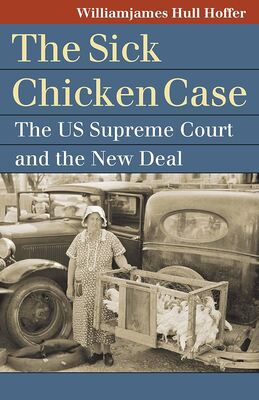
The Sick Chicken Case: The Us Supreme Court and the New Deal
Williamjames Hoffer J.D., Ph.D.
The defining legal history of a landmark decision by the US Supreme Court that gutted a key piece of FDR’s New Deal.
On May 25, 1935, in the midst of the Great Depression, the US Supreme Court handed down a series of decisions that dealt mortal blows to New Deal legislation and presidential initiatives—a day known to New Dealers as Black Monday. The most significant of these decisions was A.L.A. Schechter Poultry v. U.S., which members of the press promptly labeled the “sick chicken case.” In this decision, the Court declared the National Industrial Recovery Act unconstitutional, thus abolishing the National Recovery Administration and the hundreds of codes it had enacted. President Franklin D. Roosevelt denounced the Court’s action, which started him down the road to his ill-fated plan to pack the Court in 1937.
As Williamjames Hull Hoffer shows, however, the sick chicken case is about much more than a single piece of New Deal legislation. It is a window into American society during the Great Depression and the New Deal—a 1930s America before World War II and the Cold War, the age of radio and movie palaces, and a time of experimentation with government that some likened to fascism or communism, or maybe both. More than a landmark law case that threatened the New Deal, but ultimately did not, Schechter Poultry is not just about a sick chicken; it is about a sick nation trying to heal itself. -
Programming-Based Formal Languages and Automata Theory: Design, Implement, Validate, and Prove
Marco Morazán
Covers all the mathematical development traditionally employed in computational theory courses
Reviews essential mathematical background on sets, relations, formal logic, and reasoning about infinite sets
Provides students with the FSM programming language to implement their machines, grammars, and regular expressions -
Perceptions of State: The US State Department and International Law
Phillip Moremen
Why, and to what extent, are states more or less likely to comply with international law? No overarching state compels compliance, and the international institutional context is thin, yet states seem largely to comply. How do we explain this behaviour?
-
The Age of Climate Change and International Law: Perspectives, Reflections and Proposals
Catherine Tinker J.D., J.S.D.
-
Keeping Women in their Digital Place: The Maintenance of Jewish Gender Norms Online
Ruth Tsuria
Since its inception, the internet has been theorized as a democratic force, a public sphere in which hierarchies are flattened. But the internet is not a neutral tool; it has the power to amplify and mirror certain opinions and, as a result, can concretize social norms. So what happens when matters of religious practice and gender identity collide in these―often unregulated―online spaces?
-
The Aristotelian Mirabilia and Early Peripatetic Natural Science
Arnaud Zucker, Robert Mayhew, and Oliver Hellmann
This is the first volume devoted to the sections of the Aristotelian Mirabilia on natural science, filling a significant gap in the history of the Aristotelian study of nature and especially of animals.
The chapters in this volume explore the Mirabilia, or De mirabilibus auscultationibus (On Marvelous Things Heard), and its engagement with the natural sciences. The first two chapters deliver an introduction to this work: one a discussion of the history of the text and the other a discussion of Aristotelian epistemology and methodology, and the role of the Mirabilia in that context. This is followed by eight chapters that, together, are effectively a commentary on those sections of the Mirabilia with close connections to Aristotle’s Historia animalium and to a number of Theophrastus’ scientific treatises. Finally, the volume ends with two chapters on thematic topics connected to natural science running throughout the work, namely color and disease.
The Aristotelian Mirabilia and Early Peripatetic Natural Science should prove invaluable to scholars and students interested in the ancient Greek study of nature, ancient philosophy, and Aristotelian science in particular.
-
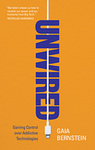
Unwired
Gaia Bernstein
Our society has a technology problem. Many want to disconnect from screens but can't help themselves. These days we spend more time online than ever. Some turn to self-help-measures to limit their usage, yet repeatedly fail, while parents feel particularly powerless to help their children. Unwired: Gaining Control over Addictive Technologies shows us a way out. Rather than blaming users, the book shatters the illusion that we autonomously choose how to spend our time online. It shifts the moral responsibility and accountability for solutions to corporations. Drawing lessons from the tobacco and food industries, the book demonstrates why government regulation is necessary to curb technology addiction. It describes a grassroots movement already in action across courts and legislative halls. Groundbreaking and urgent, Unwired provides a blueprint to develop this movement for change, to one that will allow us to finally gain control.
-

Conflict and Peace in Western Sahara: The Role of the UN's Peacekeeping Mission (MINURSO)
János Besenyő, R. Joseph Huddleston, and Yahia H. Zoubir
This book offers the first comprehensive analysis of MINURSO (the United Nations Mission for the Referendum in Western Sahara), focused on its activities, composition, purpose and operational future in Western Sahara, the world's last colony. The book's focus is broad, examining MINURSO from key historical, legal, military and political angles whilst assessing the future of UN peacekeeping missions in the Western Sahara. Supported by a diverse, international mix of perspectives and professions - including academics, lawyers, soldiers and humanitarian aid workers - an in-depth view of MINURSO is provided, rooted in practical Western Saharan field experience. The authors reveal the complexities of the region and of the mission locally, but also analyse MINURSO through a global lens, focusing on relations with the United States, China, Russia, France and African states. This approach emphasises the importance of the region as a site of international struggle while remaining conscious of local contexts. A landmark contribution to peacekeeping studies, the book is vital reading for practitioners and academics focused on the Western Saharan conflict and the MENA region, but will also be of interest to those engaged in international relations, international law and security studies.
-
Linear Algebra: Algorithms, Applications, and Techniques
Richard Bronson, Gabriel B. Costa, John T. Saccoman, and Daniel J. Gross
-
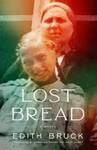
Lost Bread: A Novel
Edith Bruck, Gabriella Romani, and David Yanoff
In 1944, twelve-year-old Ditke, her parents, and her siblings are forced out of their home by the Nazis and sent to a series of concentration camps, including Auschwitz and Dachau. Miraculously surviving the war with one of her sisters, but losing her parents and a brother, Ditke begins a tortuous journey—first back to Hungary, where she knows she doesn’t belong, and then to Israel. There, she holds various jobs before she leaves with a dance troupe, touring Turkey, Switzerland, and Italy. In Italy she finds a home, at last, and a small measure of peace; there, too, she falls in love and marries.
Writing as herself, Edith Bruck closes Lost Bread by addressing a letter to God expressing her rejection of hatred, her love for life, and her hope never to lose her memory or ability to continue speaking for those who perished in the Nazi concentration camps. After the book’s publication in Italy, Pope Francis visited Bruck and thanked her for bearing witness to the atrocities of the Holocaust. -
Della Republica Ecclesiastica
William Connell
Donato Giannotti nació en Florencia en 1492, pocos meses después de la muerte de Lorenzo el Magnífico. Aunque mucho más joven, conoció a Maquiavelo y fue su amigo. Fue secretario de la República de Florencia entre 1527 y 1530, antes del regreso de los odiados Médicis. Después emigró exiliado al Véneto y luego a Roma, donde murió en 1572. Escribió tres volúmenes sobre el correcto establecimiento de un gobierno republicano: Della Republica Fiorentina (1538), el diálogo Della Republica de' Vinitiani (1540), que tuvo mucho éxito, concluyendo la trilogía con el tratado Della Republica Ecclesiastica (1541), escrito a petición del cardenal Niccolò Ridolfi, su protector, y leído sólo por unos pocos amigos de confianza por temor a las autoridades eclesiásticas. Recientemente se ha encontrado una copia manuscrita de esta obra, que se publica aquí por primera vez. Así pues, el volumen constituye una novedad absoluta. La importancia de este texto reside ya en el hecho de que se trata de la primera historia de la Iglesia escrita por un laico. Pero, además, es el contenido del último capítulo lo que sorprende y hace que el libro esté destinado a convertirse en un objeto de estudio fundamental para los historiadores. En efecto, allí Giannotti, en los albores del Concilio de Trento, enuncia su propuesta política: esto es, desplazar la autoridad política de la Iglesia del Papa al Colegio cardenalicio, a semejanza de la relación entre dux y senado en la República de Venecia.
-
The Generational Gap in American Politics
Patrick Fisher
"This book examines the history of the generational gap in American politics, with an emphasis on the remarkable contemporary gap. Using data derived primarily from the American National Election Studies (ANES), 2020 National Election Pool, A.P VoteCast, and the Pew Research Center, Patrick Fisher argues that the political environment experienced by successive generations as they have come of age, politically influences political attitudes throughout one's life. The result is that different generations have distinct political leanings that they will maintain over their lifetimes. Fisher examines each generation from the Greatest Generation through to Generation Z, who have recently started to come of voting age. He cites the entrance of the Millennial Generation and Generation Z into the electorate as completely changing the generational dynamics of American politics, through their distinct political leanings that are significantly to the left of older generations. As a result he concludes that demographically, politically, economically, socially, and technologically, the generations are more different from each other now than at any time in living memory. The Generational Gap in American Politics will appeal to a scholarly and public audience interested in American politics in general and political behavior in particular"-- Provided by publisher.
-
Joe Biden's Policies on Abortion and Immigration: The Challenges of a Catholic President
Jo Renee Formicola
The President has made decisions to try to balance his policy decisions, stances that have often clashed with his Church--specifically on abortion and immigration. This has caused him to govern in partisan ways that have led to greater social, political, and moral disunity in the United States.
-
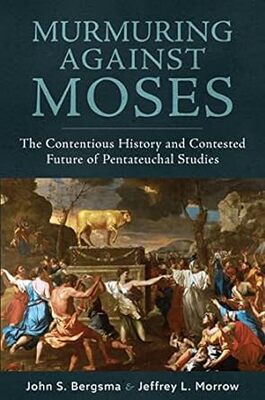
Murmuring Against Moses: The Contentious History and Contested Future of Pentateuchal Studies
Jeffrey Morrow
"For much of the history of both Judaism and Christianity, the Pentateuch--first five books of the Bible--was understood to be the unified work of a single inspired author: Moses. Yet the standard view in modern biblical scholarship contends that the Pentateuch is a composite text made up of fragments from diverse and even discrepant sources that originated centuries after the events it purports to describe. In Murmuring against Moses, John Bergsma and Jeffrey Morrow provide a critical narrative of the emergence of modern Pentateuchal studies and challenge the scholarly consensus by highlighting the weaknesses of the modern paradigms and mustering an array of new evidence for the Pentateuch's antiquity. By shedding light on the past history of research and the present developments in the field, Bergsma and Morrow give fresh voice to a growing scholarly dissatisfaction with standard critical approaches and make an important contribution toward charting a more promising future for Pentateuchal studies"-- Provided by publisher.
-

A Flaw in the Design: A Novel
Nathan Oates
As a creative writing professor in a bucolic Vermont town, Gil's quiet life is indelibly changed when he receives shocking news: His sister, Sharon, and her husband have been killed in a car accident, and their only son, seventeen-year-old Matthew, is coming to live with Gil and his family. It's with apprehension that Gil and his wife, Molly, greet Matthew. Yes, he has just lost both his parents. But they haven't seen him in seven years, and the last time the families were together Matthew lured Gil's young daughter into a terrifying, life-threatening situation. Since that incident Gil has been estranged from his sister and her flashy, vastly wealthy banker husband. And now: Matthew is their charge, living under their roof. The boy seems charming, smart, and urbane, if surprisingly unaffected by his parents' death. Gil hopes that they can put the past behind them, though he's surprised when Matthew signs up for his creative writing class. Then Matthew begins turning in chilling stories about the imagined deaths of Gil's family and his own parents. Bewildered and panicked with fear and rage, Gil ultimately decides he must take matters into his own hands, before life imitates art.
If you are a Seton Hall faculty member and have a brand new publication, please let us know using this form.
To view all current physical collection books available, take a look at our Book Catalog.
Printing is not supported at the primary Gallery Thumbnail page. Please first navigate to a specific Image before printing.